Serhiy Rebrov Steps Down as Ukraine National Football Team Head Coach After Nearly Three Years
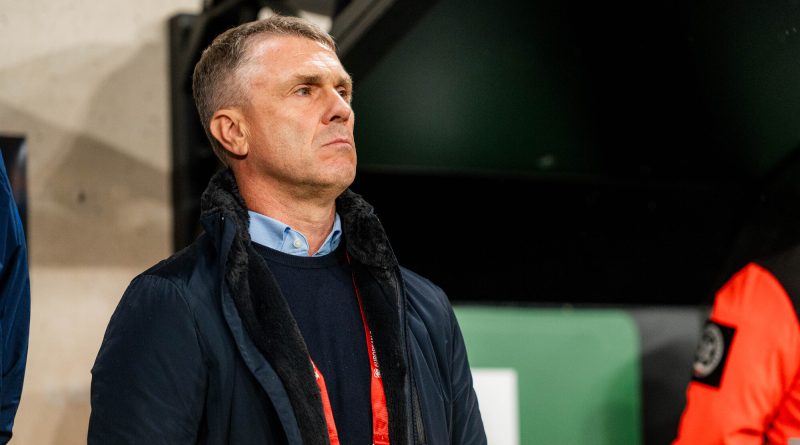
Serhiy Rebrov has officially departed from his position as the head coach of the Ukrainian national football team, bringing an end to a tenure that lasted nearly three years. The announcement marks a significant transition for Ukrainian football at a particularly challenging time for the nation, as the sport has served as a source of national unity and pride during ongoing difficulties. Rebrov’s departure leaves the Ukrainian Football Association with the task of finding a successor capable of continuing the team’s competitive trajectory on the international stage.
During his time at the helm of the national team, Rebrov guided Ukraine through a complex period that required balancing sporting ambitions with unprecedented circumstances. The 50-year-old former striker took charge of the squad and worked to maintain competitive standards while navigating the logistical challenges of organizing training camps and matches with players scattered across various European leagues. His tenure included important qualification campaigns and efforts to keep Ukrainian football visible on the world stage during a time when the country faced immense challenges beyond the pitch.
Rebrov’s coaching career has been marked by notable achievements both domestically and internationally. Before taking the national team job, he built his reputation primarily at Dynamo Kyiv, where he served as head coach and won multiple Ukrainian Premier League titles. His success at club level demonstrated tactical acumen and the ability to develop young talent, qualities that made him a natural choice for the national team position. As a player, Rebrov was one of Ukraine’s most celebrated strikers, forming a legendary partnership with Andriy Shevchenko at Dynamo Kyiv during the late 1990s and early 2000s, helping the club reach the UEFA Champions League semi-finals in 1999.
The Ukrainian national team has historically been a competitive force in European football, with its greatest achievement coming at the 2006 FIFA World Cup in Germany, where the team reached the quarter-finals under coach Oleg Blokhin. That squad featured stars like Shevchenko, Anatoliy Tymoshchuk, and Ruslan Rotan, and represented a golden generation of Ukrainian football. Since then, the national team has experienced varying degrees of success, qualifying for multiple European Championships while occasionally falling short in World Cup qualification campaigns. Rebrov’s task was to bridge the gap between that golden era and a new generation of talented players emerging in European leagues.
The timing of Rebrov’s departure raises questions about the future direction of Ukrainian football. The national team currently features several promising players plying their trade at top European clubs, including Mykhailo Mudryk at Chelsea, Oleksandr Zinchenko at Arsenal, and goalkeeper Andriy Lunin at Real Madrid. These talents represent significant potential, and the incoming coach will need to harness their abilities while building a cohesive unit capable of competing against Europe’s elite nations. The Ukrainian Football Association will likely conduct a thorough search for a replacement who can provide both tactical innovation and stability during this transitional period.
Football experts and analysts have noted that coaching the Ukrainian national team presents unique challenges that extend beyond typical managerial responsibilities. The dispersal of players across numerous European leagues means limited time together for training and team-building exercises. Additionally, home matches have been played at neutral venues due to safety concerns, depriving the team of the passionate home support that traditionally provided a significant advantage. Despite these obstacles, Rebrov managed to maintain competitive performances and keep the team’s World Cup and European Championship aspirations alive throughout much of his tenure.
As the Ukrainian Football Association begins its search for a new head coach, several names will likely emerge as potential candidates. The organization may look to another former national team player with coaching experience, following the model that brought Rebrov to the position. Alternatively, they could seek an international coach with experience managing national teams or someone currently succeeding at the club level within Ukraine or abroad. Whatever direction they choose, the new appointment will carry significant weight, as football continues to serve as an important symbol of national identity and resilience for millions of Ukrainians both at home and around the world.